April 16, 2026
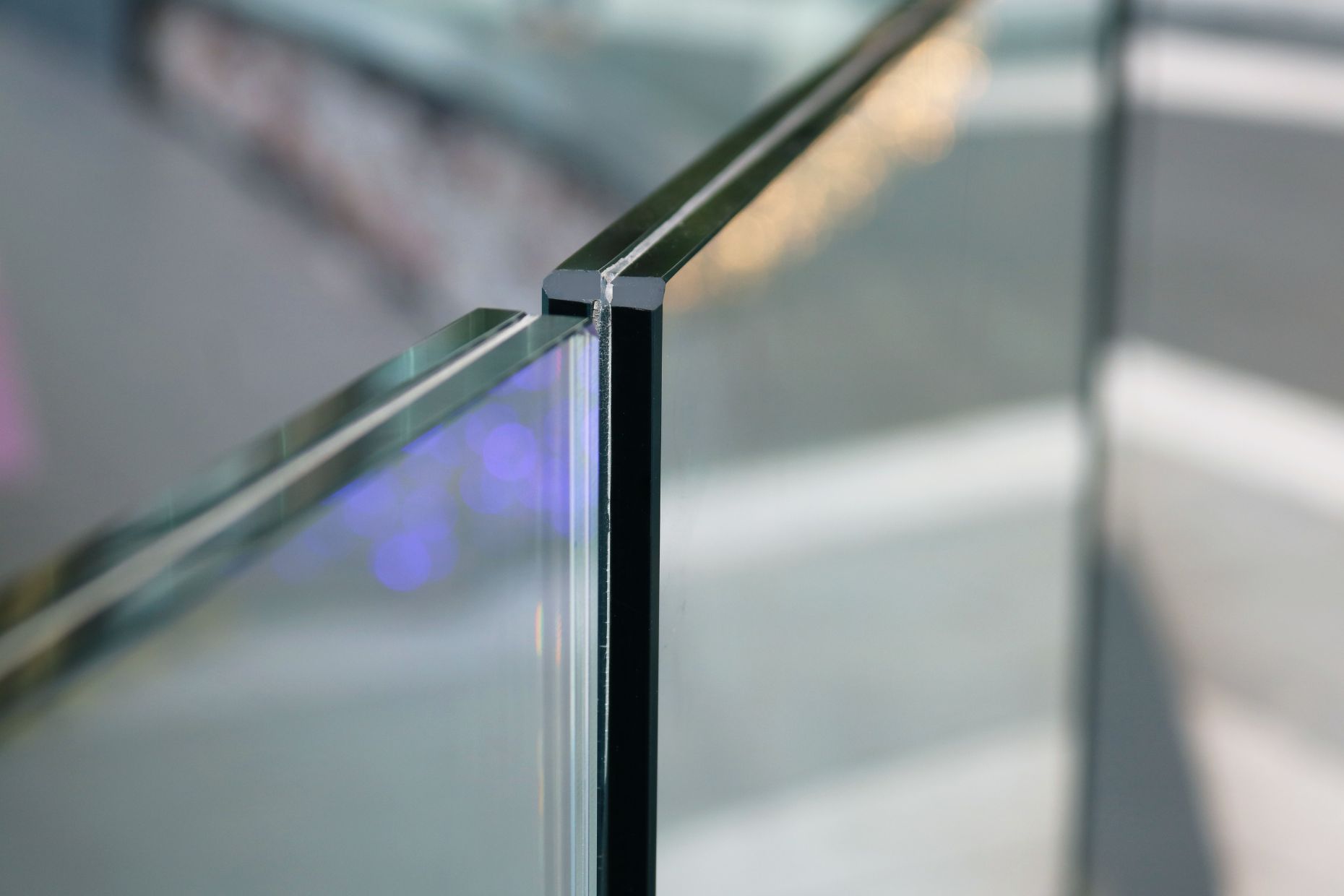
Laminated architectural glass has become one of the most important materials in modern building design. Once specified primarily for safety, it now plays a far broader role—supporting structural performance, improving acoustics and enabling highly customized decorative applications.
As architectural expectations continue to evolve, so does the need for a deeper understanding of how laminated glass configurations perform. Interlayer selection, glass type, and fabrication methods all influence how a glazing assembly responds to impact, environmental exposure, and long-term use. At the same time, new decorative technologies are expanding what glass can do, transforming it from a passive material into an active design element.
This article provides a comprehensive look at laminated glass, including interlayer options, code requirements, fabrication approaches and emerging design opportunities.
Key Takeaways
- Laminated glass is a customizable glazing assembly made from glass plies and one or more interlayers.
- Unlike tempered glass, laminated glass can remain intact after breakage, helping reduce falling glass hazards.
- PVB, ionoplast and EVA interlayers each support different performance and design goals.
- Laminated glass can meet IBC safety glazing requirements when tested to standards such as CPSC 16 CFR 1201 and ANSI Z97.1.
- Category I and Category II ratings help define impact performance based on glass size and application.
- Decorative laminated glass can incorporate direct-to-glass printing, smart glass, metal mesh, textured glass and embedded materials.
- The full configuration, not just the interlayer, must be evaluated for code compliance and long-term performance.
What Is Laminated Architectural Glass?
Laminated glass is created by bonding two or more plies of glass together with a polymer interlayer. When the glass breaks, fragments adhere to the interlayer rather than falling free. Upon impact, the glass typically forms a radiating, spiderweb-like crack pattern, while the interlayer holds the fragments together as a single unit. Rather than shattering into loose pieces, the broken glass remains adhered to the interlayer, helping prevent dangerous shards from falling or becoming airborne.
Depending on the severity of impact, the glass panel often stays within the framing, continuing to function as a safety and security barrier until replacement is required. This behavior distinguishes laminated glass from tempered glass, which breaks into small, separate fragments and does not remain intact after failure.
This characteristic distinguishes laminated glass from monolithic tempered glass. While tempered glass is stronger under initial impact, it does not remain intact after breakage. Laminated configurations, by contrast, continue to perform even after fracture, which is why they are required in many safety glazing applications.
In addition to safety, laminated glass contributes to overall building performance. The interlayer dampens sound transmission, improving acoustic comfort in occupied spaces. It also filters ultraviolet radiation, helping protect interior materials from fading. These combined properties make laminated glass a preferred choice across commercial, institutional, hospitality, and public art projects.

Laminated Glass as a Configuration, Not a Product
One of the most important concepts for specifiers is that laminated glass is not a single product. It is a configuration (or assembly) of materials that can be adjusted to meet specific performance and design goals.
A typical laminated configuration may include:
- Annealed, heat-strengthened or fully tempered glass lites
- One or more interlayers, depending on the required performance
- Optional coatings, printing or embedded materials
Because of this flexibility, laminated glass can be engineered for a wide range of applications. A guardrail panel may require a structurally robust interlayer, while a decorative feature wall may prioritize clarity and visual integration.
In many projects, laminated glass is also incorporated into insulating glass units (IGUs), combining safety performance with thermal efficiency.
PVB Laminated Glass
Polyvinyl butyral (PVB) remains the most widely used interlayer in architectural laminated glass. Its popularity stems from its balance of performance, availability and versatility.
PVB provides strong adhesion between the glass plies while maintaining optical clarity. It performs well in both interior and exterior applications and is especially effective in decorative configurations where printed graphics or colored interlayers are incorporated.
Common applications include:
- Doors and sidelites requiring safety glazing
- Interior glass partitions and office fronts
- Decorative laminated panels
- Acoustic glazing
When properly fabricated and tested, PVB laminated glass meets safety glazing standards referenced in the International Building Code, including CPSC 16 CFR 1201 and ANSI Z97.1. It is also commonly produced in accordance with ASTM C1172.
A strong example of PVB in a design-driven application is the MBTA GLX Ball Square Station, where laminated configurations were used to support large-format decorative glass while maintaining the required safety glazing performance.
Ionoplast SentryGlas® Laminated Glass
Ionoplast interlayers, such as SentryGlas®, are used when laminated glass must provide enhanced structural performance. Compared to PVB, ionoplast is significantly stiffer, allowing laminated configurations to distribute loads more effectively between the glass plies.
This increased stiffness results in:
- Reduced deflection under load
- Improved post-breakage strength
- Greater resistance to environmental exposure
Ionoplast interlayers are commonly specified for:
- Structural glass railings and guardrails
- Overhead canopies
- Façade systems exposed to high wind loads
- Exterior applications with exposed edges
Because of its durability, ionoplast is particularly well suited for projects where long-term performance is critical. SentryGlas® is a registered trademark owned by Kuraray.
The SunRunner Bus Rapid Transit Stations and the rooftop canopy for the Z Bar, located at The Peninsula Chicago demonstrate this application, where laminated glass panels featuring ALICE® direct-to-glass printing were fabricated with exposed edges in an exterior environment. To support long-term durability and performance, the laminated configuration incorporates a SentryGlas® ionoplast interlayer, which offers enhanced strength, clarity and moisture resistance compared to traditional interlayers. This combination allows the decorative glass to maintain both visual integrity and structural performance in demanding outdoor conditions.
EVA Laminated Glass Configurations
Ethylene vinyl acetate (EVA) is a thermoset interlayer that performs especially well in decorative and specialty laminated glass configurations. During lamination, EVA forms a strong, stable bond and provides excellent compatibility with embedded materials. This makes it particularly well-suited for applications that incorporate textured pattern glass, fabrics, mesh, or other decorative elements.
When properly fabricated, EVA laminated glass meets the same applicable safety impact requirements as PVB. However, its primary advantage lies in the level of design flexibility and fabrication control it offers.
GGI supplies laminated glass using all major interlayer types, including PVB, ionoplast and EVA. This allows specifiers to select the appropriate configuration based on performance requirements. However, EVA-laminated glass is produced in-house, enhancing both quality and efficiency throughout the fabrication process. By manufacturing EVA laminated glass internally, GGI:
- Maintains tighter control over interlayer bonding
- Ensures greater consistency across finished products
- Streamlines fabrication workflows
- Supports complex decorative and custom configurations
This in-house capability makes EVA laminated glass an ideal solution for projects that require both high performance and advanced decorative integration.
Resin Laminated Glass Configurations
Resin laminated glass differs from traditional interlayer-based configurations in that a liquid resin is introduced between glass plies and cured in place.
This method is typically used for:
- Specialty decorative applications
- Restoration projects
- Custom, small-scale installations
While resin laminates can meet safety glazing requirements when properly fabricated, they generally require longer curing times, special equipment to ventilate the space during resin pouring, and tighter production controls. As a result, they are less commonly used in large commercial projects.
Stock vs. Custom Laminated Glass
Stock laminated glass refers to standard configurations manufactured in commonly used thicknesses (1/4″, 3/8″, 1/2″) and interlayer combinations (.015 and .030). Fabricators and distributors readily supply these products by stock sheet, full case, or truckload. Manufacturers typically produce stock laminated glass using annealed glass. This allows custom glass fabricators to cut and further process with shorter leads times. These configurations are commonly used in applications with straightforward performance requirements.
Custom laminated glass is fabricated to meet specific project needs. This may include:
- Unique thickness combinations
- Specialized interlayers such as ionoplast or EVA
- Oversized or nonstandard panel sizes
- Decorative elements such as printing or embedded materials
Projects may incorporate a combination of both. Stock configurations provide efficiency and cost control, while custom laminated glass enables the full realization of design intent and performance requirements.
Decorative Laminated Glass Applications
One of the most significant advancements in laminated glass is its ability to integrate decorative processes directly into the configuration.
Rather than applying finishes to an exposed surface, designers can embed visual elements within the laminate itself. This results in greater durability, safety and long-term performance.
Three key decorative approaches include:
ALICE® Direct-to-Glass Printing
ALICE® Direct-to-Glass Printing technology allows GGI to apply high-resolution ceramic frit ink directly onto glass. The result is a durable, permanent stock designs or custom artwork that become part of the laminated assembly.
SwitchView™ Smart Laminated Glass
SwitchView™ incorporates a dynamic interlayer that allows glass to transition between transparent and opaque states. This provides on-demand privacy while maintaining daylighting.
MeshFusion™ Decorative Laminated Glass
MeshFusion™ embeds metal mesh between glass plies, creating a layered visual effect while maintaining safety performance.
These technologies demonstrate how laminated glass has evolved beyond safety into a powerful design tool.
Code Requirements and Performance Standards
The International Building Code defines where safety glazing is required, including doors, sidelites and other hazardous locations. Laminated glass is commonly used in these applications because of its ability to remain intact after impact.
To meet code requirements, laminated configurations must be tested to standards such as:
- CPSC 16 CFR 1201
- ANSI Z97.1
In regions subject to hurricanes or severe weather, additional testing may be required under ASTM E1996 and ASTM E1886.
Laminated glass is also typically produced in accordance with ASTM C1172, which defines quality and fabrication requirements.
It is important to evaluate the complete laminated configuration—not just the interlayer—to confirm compliance.
Safety Glazing Standards and Impact Testing Requirements
Laminated glass used in architectural applications must meet established safety glazing standards that define how the glass performs under human impact. These standards are referenced by building codes, including the International Building Code (IBC), and are critical in determining whether a glazing configuration is suitable for hazardous locations.
In the United States, laminated safety glass is typically evaluated against two primary standards: CPSC 16 CFR 1201 and ANSI Z97.1. In Canada, the comparable standard is CAN/CGSB-12.1-M90.
Primary Safety Glazing Standards
CPSC 16 CFR 1201 (Consumer Product Safety Commission)
This is the federal safety standard for glazing materials used in hazardous locations such as doors, sidelites, shower enclosures and low-level glazing. It evaluates how glass performs when subjected to simulated human impact.
ANSI Z97.1 (American National Standards Institute)
ANSI Z97.1 establishes safety glazing performance criteria primarily for interior applications, including railings, partitions and other architectural elements. While similar to CPSC, it is often used in conjunction with building codes and product specifications.
CAN/CGSB-12.1-M90 (Canada)
This standard governs safety glazing requirements in Canada and aligns closely with U.S. testing methodologies, ensuring comparable impact performance.
Understanding Category I vs. Category II Ratings
One of the most important distinctions in safety glazing is the difference between Category I (Cat I) and Category II (Cat II) performance ratings. These categories are defined by both the size of the glass panel and the impact energy the glass must withstand.
Category I (Cat I)
Category I applies to smaller glass panels and lower impact conditions. It is typically used for:
- Smaller windows
- Limited-size door lites
- Certain interior glazing applications
To meet Cat I requirements:
- Glass must be 9 square feet or less in area
- It must withstand an impact of approximately 150 foot-pounds
- This is often simulated using a 100-pound impact bag dropped from about 18 inches
Category II (Cat II)
Category II applies to larger glass panels and higher impact conditions, which are more common in commercial construction.
To meet Cat II requirements:
- Glass must be greater than 9 square feet in area
- It must withstand an impact of approximately 400 foot-pounds
- This is typically simulated using a 100-pound impact bag dropped from about 48 inches
Because Category II represents a higher level of impact resistance, it is generally required for:
- Full-height doors
- Large glazing panels
- Curtain wall systems
- High-traffic commercial environments
In practice, most laminated glass used in commercial architectural applications is specified to meet Category II, as it satisfies both small and large panel requirements.
What These Standards Mean for Laminated Glass Configurations
These safety standards are not just theoretical benchmarks—they directly influence how laminated glass is fabricated and specified.
For example:
- Interlayer thickness matters:
Laminated glass with a 0.015-inch interlayer typically meets Category I, while 0.030 inches or greater is commonly used to meet Category II requirements. - Glass construction must be tested as an assembly:
Performance is based on the full laminated configuration, including glass type, thickness and interlayer—not just one component. In applications such as railings and impact resistant windows, they must be tested as a complete system including the installation and metal systems. - Permanent labeling is required:
Safety glazing must include a visible marking that identifies:- Manufacturer
- Applicable standard (e.g., CPSC 16 CFR 1201)
- Impact category (Cat I or Cat II)
These markings are critical for inspection and code compliance in the field.
Additional Code Considerations for Laminated Glass
Beyond impact testing, certain applications require additional performance considerations.
For example, in railings and guard systems, the IBC typically requires laminated glass to:
- Be fabricated with fully tempered or heat-strengthened glass plies
- Maintain structural integrity after breakage
- Meet minimum thickness requirements depending on framing and loading conditions
- Force-entry protection and hurricane impact laminated requires specific configurations and test requirements
These requirements help prevent glass from falling out of the frame and creating a hazard after impact.
Guidance for Spec Writers
Selecting the right laminated glass configuration requires balancing multiple factors. Safety, structural performance, acoustics and aesthetics all play a role in determining the appropriate solution.
Early collaboration with a glass fabricator can help align these priorities. By engaging during the design phase, architects and spec writers can evaluate options, review samples and ensure that the selected configuration supports both performance requirements and design intent.
Considerations should include application, exposure conditions, fabrication timelines and the level of customization required.
The Bottom Line
Laminated architectural glass continues to evolve as both a performance material and a design solution. Its ability to combine safety, durability and visual impact makes it one of the most versatile materials in modern architecture.
By understanding how different laminated configurations perform—and how interlayers influence those configurations, design teams can make informed decisions that enhance both function and form. Contact GGI for design support at designassist@generalglass.com, or view our Find a Rep Map for direct contact information by location.
Frequently Asked Questions
Does laminated glass meet IBC safety requirements?
Yes. Laminated glass meets IBC safety glazing requirements when tested to standards such as CPSC 16 CFR 1201 or ANSI Z97.1.
What is the difference between PVB and SentryGlas®?
Polyvinyl Butyral (PVB) is flexible and widely used in general glazing applications, while ionoplast interlayers such as SentryGlas® provide greater stiffness, strength and structural performance.
Is EVA laminated glass code-compliant?
Yes. EVA laminated glass meets the safety glazing impact standards when properly fabricated and tested.
Does laminated glass require permanent labeling?
Yes. Safety glazing must include a permanent marking that identifies the manufacturer, the applicable standard (such as CPSC 16 CFR 1201) and the impact category (Category I or Category II).
Which is safer: laminated or tempered glass?
Laminated glass is generally safer because the glass adheres to the interlayer and can hold together upon when broken. This reduces the risk of sharp shards falling out of the opening as with annealed glass. Tempered glass breaks into small, blunt pieces but does not remain intact. Both laminated and tempered are considered “safety glass”.
Can textured pattern glass be laminated?
Yes. In most situations, fabricators can laminate textured pattern glass and other decorative glass types. However, it is best to verify compatibility with the supplier, as certain patterns or surface profiles may affect adhesion or performance.
About the Author

Brad Thurman is Vice President of Sales and Marketing at GGI (General Glass International), where he leads strategic growth across the company’s fabrication, specialty glass, and distribution divisions. A results-driven leader with deep experience in the architectural glass and building-envelope industry, Thurman began his career in 2002, working with leading companies before joining GGI in 2017.
He holds an MBA and is a Certified Construction Specifications Institute (CSI) and Construction Documents Technologist (CDT). Thurman combines technical expertise with strong business development and sales leadership, building high-performing teams, strengthening customer relationships, and aligning product strategy with real-world project demands. Based in the Louisville area, Thurman is an active member of the National Glass Association and remains engaged in advancing industry knowledge and best practices.